Showing posts with label Kenia Cris. Show all posts

Thursday, August 22, 2019

A Guest Appearance from Kenia Santos

For today’s challenge, I present you with post-rock!


Find Kenia on Instagram
@kenia.cs


Explosions in the sky. First Breath After Coma - It was the first band, the first post-rock song I heard, I don’t remember when or how it came to be. I remember I found it a great name for a band and I fell madly in love with the genre after that one song.

The first person to help shape the concept of Post-Rock was probably Simon Reynolds in 1994, when he used the term to characterize the album ‘Hex’ of the British band ‘Bark Psychosis’ writing for Mojo Magazine. Reynolds used it then used to describe a style of music that uses typical Rock instruments for non-rock purposes, a definition that approaches best what came next for the genre. 

Throughout the 20 years of ongoing development of post-rock, influences of all possible music genres, such as Jazz, Ambient, Progressive Rock, Krautrock, Post-Punk and temporary classical music can be found. Post-Rock soundscapes are created with the help of dynamics and tone modulation and the use of repetitive musical themes.

For today’s challenge, choose a song from the list below and use it as inspiration to write an untitled poem. You are expected to incorporate the song title in the body of your poem, though. You don’t need to listen to songs, but I highly recommend you to do so! (The link to the Youtube version is in the number - or access the Spotify Playlist provided below.)


1 Waiting and waltzing in airport terminals - Industries of the Blind
2 We age onward - Circadian Eyes
3 Unmake the wild light - 65daysofstatic
4 Waiting for the world to turn back - Tides from Nebula
5 If I had known it was the last - Codes in the Clouds
6 By moving the stars I have found where you are hiding - sleepmakeswaves
7 I just wanted to make you something beautiful - Industries of the blind 
8 Remember me as a time of the day - Explosions in the Sky
9 Jura - pg.lost
10 First breath after coma - Explosions in the Sky
11 The heart that fed - Caspian
12 When there were no connections - Tides from Nebula
13 Hymn for the greatest generation - Caspian
14 Law of unintended consequences - My Dad vs. Yours
15 The walk of thunder - Those Who Ride with Giants
16 What you love you must love now - The Six Parts Seven
17 They move on tracks of never-ending light - This Will Destroy You
18 Your hand in Mine - Explosions in the Sky
19 Dream is destiny - No Clear Mind
20 Every direction is North - El Ten Eleven


Wednesday, April 22, 2015

The perfect love poem


Dear Toads, how have you all been?

You haven't seen much of me around, I know, April happened to be a freaking busy month in my professional life, I'm getting ready for a CELTA course and have never been so poetically dull. But I read about this idea in February, when I was foolishly in love with this guy who turned out to be someone else's soul mate instead of mine - the perfect love poem.


British poet Julia Bird analyzed England's 10 most popular love poems to develop a formula for the perfect romantic verse, and here's what she came up with:

x (p + b + c + o)

P = Pattern. All 10 of the English favorite love poems are boldly metrical and have strong rhyming patterns.

B = Brevity.

C = Comparison. The desire to compare and describe the love is a common thread through love poetry. What’s your love like? Why, s/he’s like something else.

O = Obstacle. The analyzed love poems examine the difficulties inherent in a love affair.

X = Mystery


Julia still recommends that to write the perfect verse, we need to read lots of poetry, and just then write. But she advises: “Leave behind the language of the past. Some poetic phrases are woven so deeply into our culture (‘Shall I compare thee to a summer’s day’/‘What light through yonder window breaks’) that we reach instinctively for the archaic poem-sounding words to add gravitas to our writing. Let go of ‘thee’ and ‘yonder’, and instead find the poetry in the fads and fashions of today’s dictionaries."


So my dear friends, today's challenge is pretty obvious by now, isn't it? I'm asking you to write the perfect love poem. You can choose to use Julia Bird's formula or not, maybe you can't write form poetry (I can't), maybe whatever it is you choose to say, you need it to be long, maybe you know the secret for the completely happy relationship and would like to share it, no mystery involved. If that's the case, I'll be thankful!

The poetry you link today must be written specifically for this post. Thank you!

Please, add your link to Mr. Linky, leave a comment and visit other poets.

(Image credits: all the photos on this post are mine and are free to borrow. They were taken during the last performance of Romeo and Juliet by the Brazilian Drama Company Galpão in 2012 in a local park. The performance marked the end of a 20-year staging)


Thursday, July 31, 2014

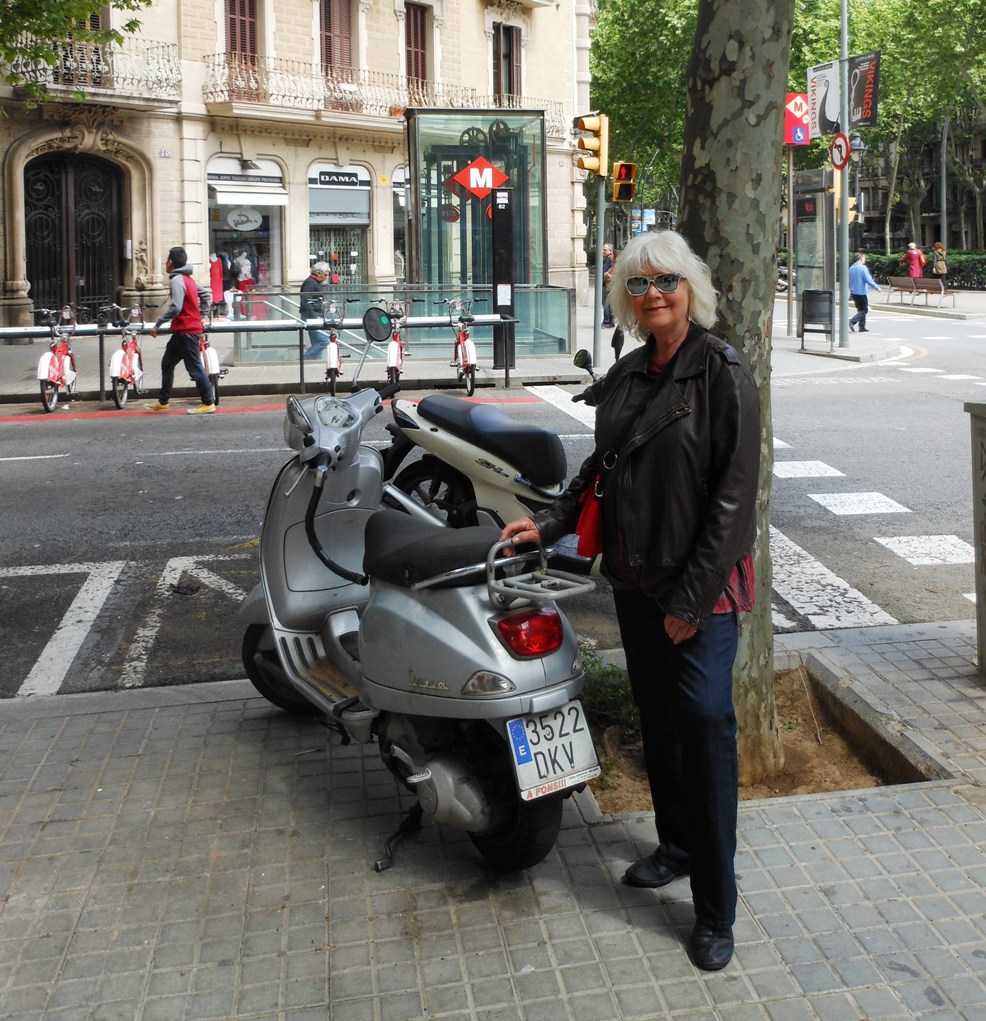
An interview with Helen Dehner

This week we get a glimpse of Helen Dehner's beautiful life and writing.

helen in Barcelona.jpg

Tell me a little about you, what you do for a living, your educational background, your family (and pets), the place where you live.

Whew!  Here we go!  I am the oldest of three daughters, born in 1941 a few months before Pearl Harbor.  I was raised in Caseyville, Illinois ~ just across the river from St. Louis, Missouri.  Caseyville was, and still is, very small.  A town where everyone knows your name, your story, your business.  In many ways my childhood was idyllic.  Great friends, Girl Scouts, band and choir.  I was introduced to the flute when I was nine, performed in a small vocal group during my teens.  I also directed the Junior Choir in our small church.  During hot, humid summers I spent hours with my maternal grandparents .. helping with farm chores.  Complaining (silently) as I herded cows to pasture, slopped the pigs, fed hay to  horses, weeded, harvested corn, tomatoes, peas, potatoes, etc.  My father died the summer I turned sixteen.  It was sudden, tragic and life-altering. My mother remarried five years later to an amazing man twenty-five years her senior.  Fred lived to the ripe old age of ninety-seven.  He was a great husband and stepfather.     

After graduating from high school I enrolled in a private two year college all set to  become an elementary school teacher.  Well, you know what they say about best laid plans ~ the degree was put on hold when I married my high school sweetheart.  Three sons followed  ~ in rapid succession.  My husband continued his education, graduating from medical school the summer our boys turned 4, 5, and 6.  Our  daughter was born the following year.  

Sadly, after twenty-two years our marriage ended.  Happily, we have remained close ~ enjoying holidays and special events as a blended family ~ his wife, their two daughters, our four children and two grandchildren. By this time we had all migrated to Minneapolis.  I returned to school after the divorce and within two years accepted a position in a large travel agency.  I remained with the agency  for the next eighteen years!  During those years I traveled the world, literally.  I was fortunate to have had so many wonderful travel adventures.

I have lived in seven States:  Illinois, Missouri, Maryland, Minnesota, Georgia, Florida and Oregon.  Today I call Bend, Oregon home.  Bend is in Central Oregon on the eastern side of the Cascade Mountain Range. Bend’s climate is considered high desert, with lots of sun, scant rain, breath-taking scenery and four seasons – none of them extreme.  We have beautiful snow covered mountains year round, fresh air in abundance, the best water in the world, and every outdoor sport imaginable.  A paradise! 

 What got you started with writing poetry?

I wrote a bit growing up and during high school/college.  I began writing in earnest in 2002 ~ the year I brought my mother to live with me.  She had Alzheimer’s disease and Lewy Body dementia (mid-stage) ~ writing helped to balance me.  I was privileged to care for my mother the last five years of her life.  Years filled with joy, sadness, humor, frustration, love and fear ~ could there be any greater inspiration?  I continued writing after her death in 2007 and in 2008 discovered the wonderful world of blogging … the rest is history.    

I love looking at the photos on your blog from the places you’ve been to. Have you ever been to a literary destination? If not, is there a specific one you’d like to visit? 

During many trips to England I’ve visited the Dickens Museum, Jane Austen’s home in Hampshire, Shakespeare’s home in Stratford-on-Avon, Wordsworth’s home in the Lake District and the Brontë home in Yorkshire.  I thoroughly enjoy poking about in libraries, old churches and museums, I can get lost for hours on end.  Our family spent countless weekends at the Smithsonian during the two years we lived just outside Washington DC.  
 I would love to visit Ernest Hemingway’s home in Key West, Thomas Wolfe’s home in Asheville, Emily Dickinson’s home in Amherst.      

Do you collect souvenirs from the places you visit? What are they?

I have carted too many souvenirs home over the years ~ coasters, calendars, books, small paintings, candles, CDs, DVDs ~ most of them gifts for friends and family.  I do have a brass candlestick holder I found in a dusty, dark antique shop in London that I cherish. 

Being a woman who enjoys traveling, you’re probably familiar with Benjamin Franklin’s quote: ‘Fish and visitors smell after three days.” (Believe me, we use it a lot here, I had no idea it was his until I searched the Internet for the origins of the saying to include in this interview!) Which three living or dead poets/writers would you like to risk and have over for longer than 3 days? 

In all candor, I think of myself as a musician who dabbles in poetry.  Leonard Cohen, Jim Morrison and Joni Mitchell are three poet/song writers I seriously admire.  Three days, three months, three years ~ I could never get enough of them.  Joni Mitchell’s lyrics are incredibly poetical, her voice is magic, she has done it all ~ folk, jazz, pop!  Jim Morrison was a complicated genius, so talented ~ gone too soon.  I have a serious crush on Leonard Cohen who is not much older than me, unattached (as far as I know) and sexier than any man I can think of!!  I melt when I listen to his music, period!  Are you reading this, Leonard?  

Do you follow any writing ritual?

No rituals.  I use a PC in my loft / office.  I keep a notebook on the table next to my bed as I sometimes ‘dream’ poems.  I love responding to all sorts of challenges ~ art, form, photography, topic.  I need peace and quiet when I write, any time of the day will do.  I also  ‘compose’ poems during three mile daily walks .. get home as fast as possible and make a mad dash for the computer!    

Do you keep a traveling record?

I do not journal during trips.  Photos tell the stories, keep memories alive, inspire me and my writing.  

Is there a poem you wrote you would like more people to have read? 

I wrote these poems during the last two years of my Mother’s life ….  

:: I’m Still Here  

Though you can’t remember
Without cues from the past
Though you can’t recall
Dreams and plans for life
Though you live in your own world
Within a shrinking border
I’m still here to guide you through, I’m still here.
Loved ones still remember
All the magic that you cast
Sharing strength and wisdom
With everyone you touched
Though you live in your own world
Within a shrinking border
I’m still here to guide you through, I’m still here.
The key to life is memories
Long ago, real and imagined
A smile on your face the light in your eyes
Remind me it’s not time for our goodbyes
Though you live in your own world
Within a shrinking border
I‘m still here to guide you through, I’m still here.


 :: The Journey to Dinner

I watch 
as their day comes to a close
the continuous shuffling of bodies and souls
some of them walking unaided
some of them walking assisted
some of them being pushed in chairs
familiar journey to a room
most of them can't recall from day to day
I wonder 
will he or she be there the next time I visit
 I've grown so fond of them all


If you could not express your feelings & thoughts through the medium of poetry, what other medium would you choose?

Music, music, music. I would put more energy into singing and playing that flute of mine! Actually, Bend has a ‘senior citizen’ orchestra and choral group.  I still have time!

Is there a topic you still haven’t covered in a poem and would like to try in the near future?

I’ve covered death, war, love, passion, sadness, euphoria, politics, family, anger, humor ~ I think the only topic left is religion ~ which I won’t do!  Smiles.

I’m a disaster at rhyming, I have given up trying it, definitely not my thing. I’ve left you a comment once, saying how much I liked your rhyming because it’s simple and carries a playful tone (to me). Do you ever struggle with writing? Is there something you feel like you can’t write? I mean, form poetry, poems about war, etc?

You know Kenia, my poems gravitate between goofiness and gravitas. I enjoy rhyme, I also enjoy free form. I don’t have a style, nothing is predictable about my poetry. I struggle with sonnets and octaves and pantoums ~ but I’m willing to try anything once!

Will you please leave us a piece of personal inspiration, a quote, song or poem you always feel good about?

At the bottom of Poetry Matters is a quote from Gail Godwin that has inspired me for ages: 

“There are two kinds of people. One kind, you can just tell by looking at them at what point they congealed into their final selves. It might be a very nice self, but you know you can expect no more surprises from it. Whereas, the other kind keep moving, changing.  They are fluid. They keep moving forward and making new trysts with life, and the motion of it keeps them young. In my opinion, they are the only people who are still alive. You must be constantly on your guard against congealing.” 

Thank you again Helen, for your time and kindness. It was really great to talk to you. 

Thursday, May 8, 2014

An interview with Fireblossom

Morning Toads!

This week I talked to Shay Simmons, known among us as Fireblossom/Coal black, a devoted follower of Saint Creola, owner of a great mind and an incredible storyteller-poet. 


“Hates Haiku. Flies solo” - is it the shortest poem you have ever written? (smiles)

LOL yes!

How long have you been writing? Have you always written the same style? Do you have any formal education in poetry? 

My style has evolved, to say the least. I began writing poetry when I was a teenager, and had my first publication at age 18. I had about three dozen publications in small press magazines by the time I was 26, then stopped writing for twenty years before taking it up again in 2006. Even though a lot of those older poems got published, only about three of them are anything I would ever let see the light of day today. The thing that really helped me - besides writing writing writing - was losing my fear of taking on any subject, and learning to just be honest about how I feel about a thing, without worrying about reaction. I learned that the more honest I could be, the more people would identify with what I write. In other words, if I feel a thing, so do a lot of other people.

Writing is like anything else. If you have a little talent, that’s fine, but it is the constant working at it to get better, the constant working to improve, that pays off.  

Tell me a little about your family. Are you the fourth child of a hippie family? 

You almost guessed! I am the third child of a very conventional conservative family, and the youngest by nine years. My parents were the age of my friends’ grandparents. My father was a newspaper editor and I grew up in a house full of books. He used to read to me, and instilled in me a love of words, and of American history. He always wanted to write novels, and completed three, but they were never published. He once said to me, “If there is a writer in the family, it is probably you.” 

My mother always acted like my writing was a foolish waste of time. She is a very practical woman, not warm and fuzzy by any stretch of the imagination. She basically has always tried to get me to be like her, and I’m just not.

I have two brothers, both children of the 50s and early 60s, both successful, both much older than me. I’m a child of the 70s, and a creative type to the core. 

I’ve been married twice, the first time for just a few months. I have a son who is 28 and the apple of my eye. Really, if I have done one lasting thing right, it is whatever I may have done to have such a fine son. I have been single now since 2001.  

I have a dog, an Australian Shepherd named Bosco. He is the star, around here!

I read many stories told by Fireblossom. How much of Shay is there in these stories?

In my story collection “Night Blooms”, there are really only two that contain a lot of things that actually happened in my life: “Emeraude” and “Blood & Promises”. However, there is something of me in most of my stories and story poems. The “soul” of it, you might say. “All stories are true” is one of my favorite quotes, attributed to many.

You spread science fiction in your poems whenever you have the chance to. How much do you like Science Fiction? 

I love science fiction, as distinct from science fantasy, which I don’t care for at all. To me, the best science fiction relies on character, on human complexity, not mechanical complexity. When I write science fiction, I am really just writing about people, but sci-fi allows me to isolate them, stress them, and expose them to extraordinary situations. I love science fiction that includes important female characters. My sci-fi stories are never shoot ‘em ups. I think the most interesting conflicts happen within.

Which three poets, dead or living would you like to have over for coffee and conversation?

Emily Dickinson, of course. I feel a personal connection with her ever since visiting her home in Amherst, where I felt her strongly. She wrote her own way, ignoring contemporary “rules”. She listened to, and honored her own voice. And she was in love with a woman she couldn’t have, but who lived right next door. I feel like we would have lots to talk about!

Edgar Allan Poe, because he had such an amazing imagination, and was aware of his own genius, which I find interesting. He invented whole genres of writing, and had such an eye for the bizarre and strange, not to mention the sheer beauty of his poetry. He always seemed to need a muse, a woman to appreciate his creations, and his life was never easy. I don’t see how he could be anything other than fascinating.

And Stephen Crane, because his poetry is so ahead of its time, so blunt and visceral and thought-provoking. I am including him for his poetry, but I think it is interesting to note that, at the time he wrote “The Red Badge of Courage”, he had never witnessed a battle. He had the big imagination, the courage to say what he thought and to write what he felt in the way he wanted to write it. 

I’ve always been REALLY curious about the hands in your banner. Are they your hands?

No, that’s just a picture I found on weheartit.com, that I felt expressed me. Until pretty recently, I wrote all my poetry longhand, in notebooks, as she is doing, and I like what she’s wearing, including all the rings and what-have-you. I am basically just an old after-the-fact hippie chick. 

I love reading your poems because you’re among the best storytellers I’ve ever read. Is there a story you’d like to tell and still haven’t found the best words to?

Yes. Yes. I’m sure there are dozens, hundreds, but there is one particular one that I want to tell, that I just haven’t found the perfect words for, yet. As the song says, sometimes I feel like a motherless child, and I’d like to express that mother-hunger in poetry, but it’s very tricky to express exactly what it is, and to do it unguardedly.  I haven’t managed it, yet. When I was a child, I got this National Geographic magazine for kids, and one issue was about these monkeys that some idiot scientist studied to determine if they needed mothers. The cover picture was this little monkey holding onto a wire mesh “monkey” with cloth wrapped around it, and the little monkey looked so destroyed. I stared and stared at it, thinking wow, it’s me. I may never find the words for that.

Do you follow any writing ritual?

Yes! I have to slowly get into the zone. I use prompts, pictures, music, a hot bath, anything that will allow me to let my mind wander over a particular situation or emotion until a line or a phrase comes to me. Once I have that, I’m on my way. Also, I need quiet, to write. I can’t write if there is noise. My street is as quiet as the library, fortunately!

Do you write every day?

Pretty much. There are days when I am simply too tired, or something, but generally speaking I do write every day. And I READ every day, too.

What would your friends tell me about you if they could say anything?

Oh goodness, probably that I owe them ten dollars or something! I guess I would hope they might say that I have a good heart, that I’m loyal, funny, hard-working, and stuff like that. They might also say that there is a little of the drama queen in me sometimes. I’m always wanting things to be stories, and also, I don’t keep my emotions inside. It’s a difficult question to answer! Someone said that each person is really three people: who they are to themselves, who they are to others, and who they really are. You should ask Mama Zen and Hedgewitch, my talented co-authors. They know me as well as anyone.

Is there a poem you wrote you’d have liked more people had read? 


I adore your poem "For young poets":

First, stop banging away at silence 
like you would with a snow shovel against the ice.
A poem is not a dancing dog,
summoned to perform on its tiptoes at parties.

Put away all spirituous beverages.
Those who write while pitching in a sea of booze
do so in spite of such idiocy, not because of it.
If you haven't the imagination to see things differently without such props,
then become a mail carrier or a bus driver. (continue reading)

There are a few other quite famous poems written on advice to writers/poets like Bukowski's 'so you want to be a writer'. Has there ever been a piece of advice on writing you received/read about and it proved to be totally bullshit?

Oh gosh yes, where do I start? One is "write every day". Yes, if a person wants to be a writer then they obviously need to write, but I find that the Poetry-Making Machine needs breaks, at times. The PMM is a racehorse, not a plough horse, and some days there is a big race, and other days just a walk around the track, which might be reading other people's poems, or spending time outdoors, or just recharging by plopping on the couch and watching a movie. One must write regularly, but not daily. Trying to write daily is abusing the gift, in my opinion.

Another is the old chestnut "write what you know." While it's true that a person can't write about a subject they are ignorant about, let's leave room for imagination and for research! Maybe you don't know your subject YET, but there have been countless, countless times when I have wanted to write about something I didn't know much about, and so I researched it first, until I DID know about it. Some things don't even need that... imagination alone is enough, when combined with basic life experience. I've never been on a space ship or visited another planet, but I can imagine it.

One bit of advice that I DO agree with is "read,read,read." I can't tell you how many blogger poets I run into who say they don't read. It shows. To learn any craft, study those who have mastered it. Read the best poetry you can find, and by that I mean, the poetry that moves you, astonishes you, makes you wish you had written it. There are plenty of famous names who don't move me, and plenty of unknowns who do. I read what moves me, inspires me, and challenges me to be better.

Thank you very much for your time, Shay, it was really delightful to talk to you. 

Thursday, May 1, 2014

An interview with Grapeling

After flunking out of Mechanical Engineering, he studied Rhetoric at UC Berkeley, taking mandatory classes on The Rhetoric of Poetry for 2 semesters with “a Professor who wore robes to class, and might easily have been a court jester in the Middle Ages, or taught at Hogwarts”, he says.  

Allow me to introduce you to Michael, known among us as Grapeling, he lives in Laguna Beach with his girlfriend and sons, and he kindly agreed to answer a few questions for The Imaginary Garden with Real Toads.

(Photo taken by Patricia O'Driscoll)

Kenia Cris: The first post ever made to your blog is a Buddha’s quote I particularly like very much: “The problem is you think you have time.” What is it you wish you had more time for?

Michael: Ahh. Yes. I had something very smart thought up in response to your question, then forgot to write it down. Damnable conceptual art habits are difficult to shake. There’s a saying - youth is wasted on the young. And a line from the Pink Floyd song, Time - "one day you find ten years have got behind you, no one told you when to run, you missed the starting gun." 

So it’s not so much I wish I had more time for anything… but that… time is the only currency that truly matters. Money is a derivative of time. Some might say time is fungible, but I don’t believe so. ‘Time is money’ is a metaphor, but it’s not a truth. It can’t be traded for more time. We look everywhere for symmetry - in faces, in dualities - left/right, up/down, back/front. We see two faces on every coin. But time uniquely is not symmetrical. It goes only … forward, science fiction notwithstanding. The problem is, you think you have time. But you don’t. Not to be trite or contrarian, but time has you.

KC: I’m borrowing some of Isaac Asimov’s words to make this a better second question: “I don’t like anything that’s got to be. I want to know why.” I want to know why you seem to often describe yourself as an uninteresting person/poet.

Michael: I Am Robot. Foundation and the trilogy are one of my favorite reads from teen-hood.

I suppose I’m more interested in other people. I deflect. Likely a result of being spotlighted when very young, of being told I had ‘potential’. A damning word, to me. I spent puberty and my adult life attempting to blend in, to be accepted, to not stand out. Perhaps it’s false modesty. Perhaps it’s a cry for attention, not meant to be taken literally, but as a challenge. Maybe it’s a way of setting low expectations, so that I need not excel. Or that I can over-deliver, having under-promised.  Or, perhaps, I’m just not that interesting. Occam’s Razor… (he smiles)

I was going to write a catalog of all the poets I admire but didn’t want to leave anyone out. Suffice to say, I find my words inadequate to convey my appreciation for what I read daily, and then find my own offerings pale, or pedantic, or trite. Or worse - boring, unreadable. But still I continue. Sometimes a phrase catches me, and I have no choice but to pen it. But I’ve been told I’m my own worst critic.

KC: Do you have a particular place in the house to write in? Do you ever handwrite your poems before typing them? 

Michael: On my laptop. At my prior apartment, at my dining room table. Now, on the couch. Never hand write. My scrawl compares unfavorably to an arthritic chicken. I can’t even read it sometimes, moments after having “written”. It’s atrocious. I shoulda been a doctor.

Laguna Beach, January 2014

KC: Maybe it’s because I can barely count (because I hate Mathematics and it hates me back), I noticed you’ve written quite a number of Fibonacci poems. Is your job connected with numbers?

Michael: Yes. Finance. Also, Hedgewitch posted a challenge in the garden last year the same week as one at dVerse, and I got infected with Fib fever. It’s terminal, I’m afraid.

KC: How much of your poetry is autobiographical and how much is fiction?

Michael: It’s factional. So, there’s poetic license, right? As it turns out, I believe that since language is a construct, and has rules and accepted conventions, and, that there are hundreds of languages, that the human conceit that ‘thought’ can be ‘true’ is also a derivative. In this case, a derivative of perceived reality, which itself is a derivative of actual reality. So language is a 2nd derivative of reality. Then it gets edited or censored to suit some ill- or well-conceived desires. Consequently anything I write, you write, any of us write, is maybe a 3rd or 4th generation approximation of ‘truth’. Ever see a photocopy of a copy of a copy of a copy? How the lines blur, and faces blotch to unrecognizable? That’s my view of writing, and especially, of poetry, compared to ‘life’ as it were. So is it autobiographical? Certainly… inasmuch as any simulacrum of a pseudonym can be. But I’m being obtuse. Some is, some is fictionalized but has ‘true’ roots, and some is flat out fabricated.

KC: Which dead poet would you like to have been friends with and why?

Michael: Wouldn’t that mean I’m also dead?

Rumi? Neruda. Rilke. Except I don’t think they’d have been friends with me. They understood subterfuge and eschewed pomposity. They were genuine, authentic, inquisitive. They gave us as close to 1st order approximations of reality as language can get. Poetry is that razor that by subverting convention and the orders of language enables us to see the mechanism, as it were, or rather, unmask the curtains that hide the fires that stoke us.

The longing in your poetry, for instance - its rawness, clarity, the unflinching and candid reveal - that is genuine. Glad you’re alive and I get to know you, if a bit, though. (he smiles) 

KC: If you could not express your feelings & thoughts through the medium of poetry, what other medium would you choose?

Michael: I think silence is an excellent medium.

(he smiles)

Music? No, that’s poetry integrated with sound, sometimes substituted for by sound. Painting? I have several friends who are artists. Brilliant stuff. I wish I had their talent. Engineering. I’d like to be able to build stuff. My younger son has a desire to build. I encourage it assiduously.

Michael at the age of 10

KC: Is there an unread poem in your blog you wished more people would have put eyes on? 

Michael: Hm. Night is now fellI dunno. Grit, Glossed?

KC: You said in another interview you grew up reading lots of science fiction because your mother and uncles did. Does your choice of reading today have any influence on your children’s choice? Do they read poetry because you write it? 

Michael: Laughing. No. I hardly read anymore, after having been a sponge as a child, and am continually astonished and subdued at how erudite Hedgewitch, Brendan, Kerry, ManicDDaily, Jane Hewitt, and others are in their commentary, and at the breadth and depth of talent both in the garden and other sites I frequent. I have tomes of Neruda, Rilke, Oliver, Rumi, Hafiz in a box waiting for me to unpack, having told myself I need to read or reread them. I learn of new (old) poets all the time, often in the commentary of other poets (nodding towards Hedgewitch and Brendan). Sometimes I wonder if I fear reading the best poets because it would reveal me as the hack I actually am. So ignorance is bliss.

My boys like what they like. I’ve tried to foist Sherlock Holmes without success. But they like the John Carter of Mars series (despite the horrific movie). My younger son reads voraciously, including Discover and Popular Science and Nat Geo magazines as well as lots of fiction. My elder son reads on his Kindle, recently Game of Thrones I believe. They’ve been cool to Heinlein, Asimov, Clarke, Robinson, Herbert, Harrison, et al, but that’s OK. So long as they read something... They don’t read poetry, and certainly not mine. Maybe I’ll let them know that I write, someday. (he smiles)

KC: You present the reader with questions in many of your poems (which always reminds me of Neruda’s The book of questions), some are rhetorical, some are meant for them, some are meant for yourself. So, to finish this interview, what I ask of you is that, other than a piece of advice, you leave us a question.

Michael: I’ll leave it to a much better writer and human than me - Mary Oliver, since I pretty much cribbed the ‘ask a question’ format from her anyways - in her astonishing poem, The Summer Day

“Tell me, what is it you plan to do
with your one wild and precious life?”

KC: Thank you for your time and attention Michael. It was a pleasure to talk to you. 

You're all invited to answer Michael's/Mary Oliver's question. 

There are 34 pages (today) on Grapeling’s blog, I suggest you to go and discover the man written on the pages before the first poem you’ve read there. Here are my personal 10 favorite poems of his, pick a number and enjoy it. 

1. 23. 4. 56. 7. 8. 9. 10.

Sunday, April 6, 2014

Sunday Mini Challenge - Poem A Day Edition


Greetings Toads! 

This is Kenia here, we've had a fun, prolific week in writing and I'm more than happy to host a mini challege to call it a week.

It's Sunday!  Have you had a look outside your window yet? 


I'm writing this on a Tuesday, but according to the weather forecast, we're going to have a rainy day this side of the world (which I don't mind, rainy days are my favorite actually).


I had a hard time getting to work this morning. I live in a quite big city, the traffic is crazy here.


Every morning I get stuck in a traffic jam for 30 minutes (on lucky days). I ride the bus to work, so I use the time to read or listen to music, sometimes I write ideas for poems but my favorite thing is to observe how the jams affect people. 

Because of my weekly routine, my initial thought for this challenge was to have you write a poem which contained the word 'unmoving'. But it's Sunday for God's sake! Sundays have their own dynamics. Sundays have church early morning, markets, street markets, parks, clubs, family over for lunch, friends, laughters - Sundays are for a change in routine.  


So what I ask of you, my dear green friends, is to write a poem about a Sunday in your lives. Pretty simple, isn't it? Please write an original poem specific to this challenge and post it on the Mr. Linky provided below.

Have a great day!

(Image credits: all the photos on this post are mine and are free to borrow. Photos 1, 2, 3 and 5 were taken during the last performance of Romeo and Juliet by the Brazilian Drama Company Galpão in 2012 in a local park. The performance marked the end of a 20-year staging.)


Wednesday, February 19, 2014

Get Listed! with Kenia Cris

I’m delighted to have been invited to contribute with this month’s Get Listed Prompt, thank you very much Kerry.

Kenia Cris

I’m a book addict, I have read quite a lot and it was really difficult to choose from the selection of amazing texts I have in mind one that could provide inspiring words for you today. I then decided to go with science fiction. It’s my favorite literary genre, together with fantasy so my list comes from a favorite book of mine Do Androids Dream of Electric Sheep? written by Phillip K. Dick, published in 1968 and made into a movie in 1982. The novel is set in a post-apocaliptic near future, where life on Earth has been altered by nuclear war and most of its residents have been relocated to a new colony on Mars.


See link below
(Copyright status unknown)

If you find it crazy to imagine, you should remember a huge number of people have volunteered to inhabit the first private colony in the red planet [Source] , and you might agree these photos of the sunrise in Mars look really great.


Original Cover
Fair Use

Back to our novel, radioactive dust killed many forms of life and in the remaining society, life has become really important and valuable. The book is mostly about empathy, about how how connecting with others’ feelings can bring people together. I guess you should know it’s an electric toad that teaches Rick Deckard, the main character, a bounty hunter, the true sense of empathy, when he makes up his mind to love the fake toad as if it were real. Well, I offer you a list of words chosen randomly by flicking through the book. I really hope you enjoy the it!

Semi-ruined

Shared

Collection

Doubt 

Roof 

Different 

Illegal 

Human 

Cardboard 

Chance 

Dismal 

Crestfallen 

Fragile 

Ever-present 

Dust 

Contained 

Possibilities 

Future 

Stones 

Hours

Imagined by Kenia Cris


Saturday, November 10, 2012

The Sunday Mini-Challenge

© Kenia Cris

A fortnight ago, we tried our hands at a stanza form devised by Paul Laurence Dunbar, and today I would like to turn attention to a stanza form employed by Louis Macneice, in his poem The Sunlight on the Garden.

The stanzas are written in six lines and set out as follows:
xxxxxxa  (7 syllables ~ double rhyme, feminine)
xaxxb      (5 syllables ~ single rhyme, masculine
                     and double rhyme feminine on syllables 1-2, a rhyme)
xxxxxxc  (7 syllables ~ double rhyme, feminine)
xcxxxb    (6 syllables ~ single rhyme, masculine
                     and double rhyme feminine on syllables 1-2, c rhyme)
xxxb        (4 syllables ~ single rhyme, masculine)
xxxxxxa  (7 syllables ~ double rhyme, feminine)

The opening stanza of Macneice's poem:

The sunlight on the garden
Hardens and grows cold,
We cannot cage the minute
Within its net of gold,           (Here the c rhyme falls on syllables 2-3)
When all is told
We cannot beg for pardon.


© Ellen Wilson

The form may seem tricky, but the end result is a stanza with elegant balance between the various rhymes and line lengths.  However, feel free to adapt this basic layout to suit your own taste and style.  Alternatively, you may choose to use one of the photos kindly shared by our Real Toad members as inspiration for a poem written in Free Verse.

© Susie Clevenger


The Sunday Challenge is posted on Saturday at noon CST to allow extra time for the form challenge.  Please provide a link on your blog back to Real Toads.  We stipulate that only poems written for this challenge may be added to the Mr Linky.  Management reserves the right to remove unrelated links, but invites you to share a poem of your choice on Open Link Monday.


Saturday, October 20, 2012

The Sunday Mini-Challenge

Last week we focused on the four-line form of stanza, known as the Envelope Quatrain, and I would like us to consider the possibilities of other quatrain forms today. Despite the quatrain's perennial popularity among  poets, it can be fairly limiting, as there are only so many rhyme variations possible:

Alternate:
a b a b
a b x b

Couplet:
a a b b

Envelope:
a b b a

And various combinations:
a b c b    d e c e
a a b a    b b c b
a b c d    a b c d

© Kenia Cris


While I was searching for a poetical form which consists of only 4 lines, I came across a genre of Chinese poetry called Midnight Songs.  A collection of these poems under the title "Lady Midnight" appeared in the 4th Century AD, and were popularized by famous poets, such as Li Po. The poems are arranged into four sections for the four seasons: spring, summer, autumn and winter. Thematically, they represent four views of the seasons. They are written in four lines (paired couplets), each of which consists of 5 Chinese characters, known as yuefu.


© Ellen Wilson


This information led me on to discover a similar form called Jueju. Jue Ju is one of the oldest of the Chinese patterns and in the 3rd century AD the Jue Ju was very popular. It often carried "suggestively erotic themes". It does not tell a story but attempts to create a mood. This example is given on Poetry Magnum Opus:

Autumn Moon by Cheng Hao
(translated by Xiao-zhen, Nov 2009)

Over green hills a limpid brook flows
Sky mirrored in the water of autumn hue
Away from the distant earthly world
Maple leaves and velvet clouds leisurely float


© Teresa Perin

If one is to attempt an English version of this poetic style, the following guidelines are offered:

Line length: 5 words per line
Lines per stanza: 4
Theme: Often suggestive of erotic love
Rhyme scheme: couplets or unrhymed


© Hannah Gosselin


Our challenge for today is to write either a four-lined poem, following the Chinese forms described above, or to write a longer poem, in rhyming quatrains, using any of the variations mentioned.
I have also included the photographic talents of several of our Real Toads Members and Followers. Remember to acknowledge the name of the photographer on your blog, if you decide to use an image as inspiration for your poem.
The Sunday Challenge is posted on Saturday at noon CST to allow extra time for the form challenge. Please provide a link on your blog back to Real Toads. We stipulate that only poems written for this challenge may be added to the Mr Linky. Management reserves the right to remove unrelated links, but invites you to share a poem of your choice on Open Link Monday.

Saturday, September 29, 2012

The Sunday Mini-Challenge

Today we will be taking a look at the three line construction in poetry, which is known as the tercet.


© Joy Ann Jones

The Tercet is an innovation of the 14th Century Italian poet, Dante, who uplifted the ordinary three lines of folk verse to the recognized stanzaic for of his Divine Comedy. As such, the tercet is any three lines of verse grouped as a single idea or unit, which may be followed by another, with or without a line break. Examples of forms that employ tercets are terza rima, villanelle and it is the basis of the sevenling we had fun with last weekend. Thus it can form the frame of a poem with any number of 3 line units, or be used to write a tristich - a complete poem in three lines.


© Kenia Cris

Poets have used a variety of rhyme schemes for three line constructions, such as the interlocking aba bcb (etc), and the couplet based aab ccd (etc) or abb cdd (etc) but unrhymed tercets are equally effective, as in this example of The Snow Man, by Wallace Stevens.  The Sicilian Tercet is written in iambic pentameter with an interlocking rhyme, such as can be seen in Acquainted with the Night, a terza rima sonnet by Robert Frost.


© Susie Clevenger

Please read more on Poetry Magnum Opus, my source of information for today's challenge, which is to write a poem, either inspired by the photography which has been kindly shared by members of Real Toads or from your own source, using the tercet as your frame. Those who like to write haiku are also welcome to link up poems of that form, since they falls under the heading of tristich.
If you upload one of the photos to your own site, we ask that you acknowledge the name of the artist. The Sunday Challenge is posted on Saturday at noon CST to allow extra time for the form challenge.  Please provide a link on your blog back to Real Toads.  We stipulate that only poems written for this challenge may be added to the Mr Linky.  Management reserves the right to remove unrelated links, but invites you to share a poem of your choice on Open Link Monday.