Showing posts with label New POV's Building Global Awareness. Show all posts

Friday, May 3, 2013

Transforming Friday


Hello Toad friends!!

It’s Hannah here with your ninth and final ecoregion. The challenge is to transform your poetic voice into that of the wildlife from the Tropical Rain Forest!

Old treasured words, “Classics Edition of the World Atlas-Hammond 1967,” says Tropical Rain Forest: Trees over one hundred feet high form a canopy above dense, steaming undergrowth in which rubber, teak, mahogany, bamboo and balsa grow.
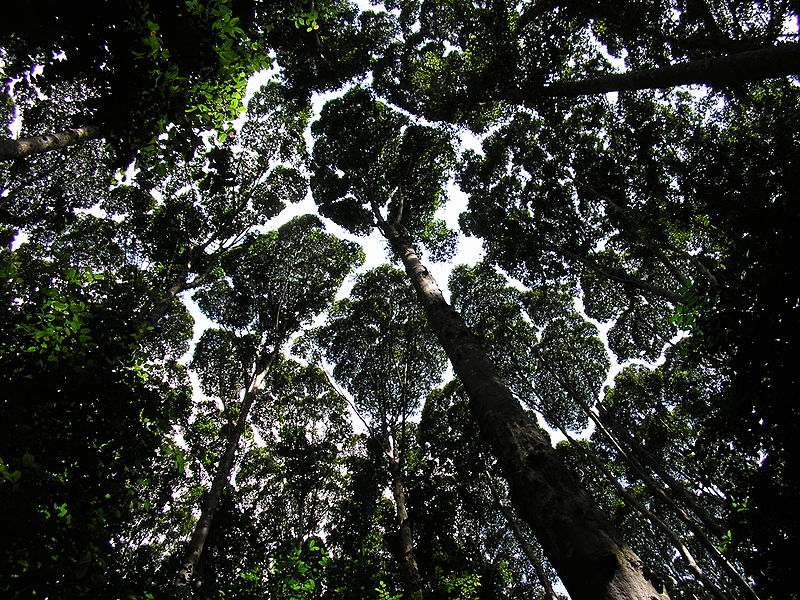
(Wiki Creative Commons Attribute Author=Mikenorton 
Rainforest canopy at the Forestry
Research Institute Malaysia)

Some information I pooled from the handy-dandy Wikipedia...

Tropical rainforests have existed on Earth for hundreds of millions of years.

They have been called the "jewels of the Earth" and the "world's largest pharmacy", because over one quarter of natural medicines have been discovered within them.[8] It is likely that there may be many millions of species of plants, insects and microorganisms still undiscovered in tropical rainforests, (wiki).

There are four different types of rainforest: Lowland equatorial evergreen rain forests, Moist deciduous and semi-evergreen seasonal forests, Montane rain forests and Flooded forests.

The rainforest has an interesting structure that’s broken into layers: Forest Floor, Understory Layer, Canopy Layer and Emergent Layer.

Different types of animals reside in these different layers that I’ve listed. Here’s a general list of tropical wildlife to pick from, (check copyrights for the images you choose).

Oh, I love monkeys!! These two are so intent in sharing a meal!
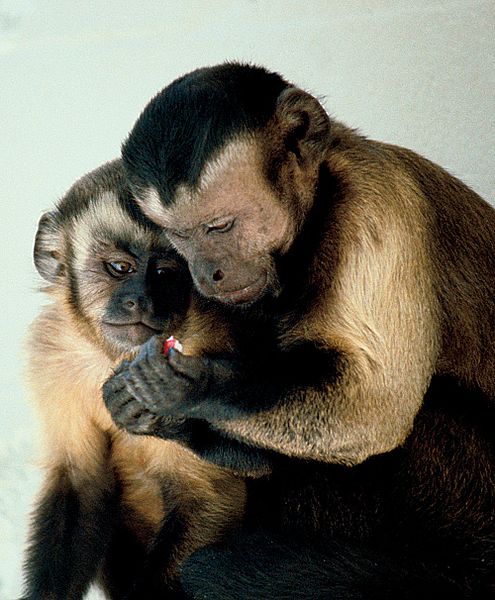
(Wiki cca author=cc-by-2.5 Cebus apella group. Capuchin Monkeys Sharing)

There’re so many amazing species of tropical birds you could browse but in the meantime you could enjoy this movie I watched recently.

It’s an inspiring film about the Harpy, a Jungle Eagle on MPBN.
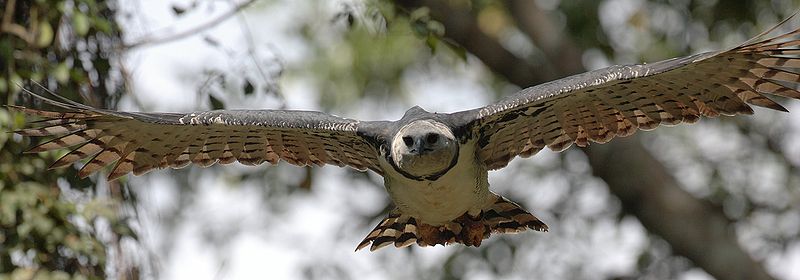
(Wiki cca Harpy Eagle -- Camino del Oleoducto, Parque Nacionale Soberania, Panama -- )

One could write from the perspective of this intriguing creature, the Koala Bear.
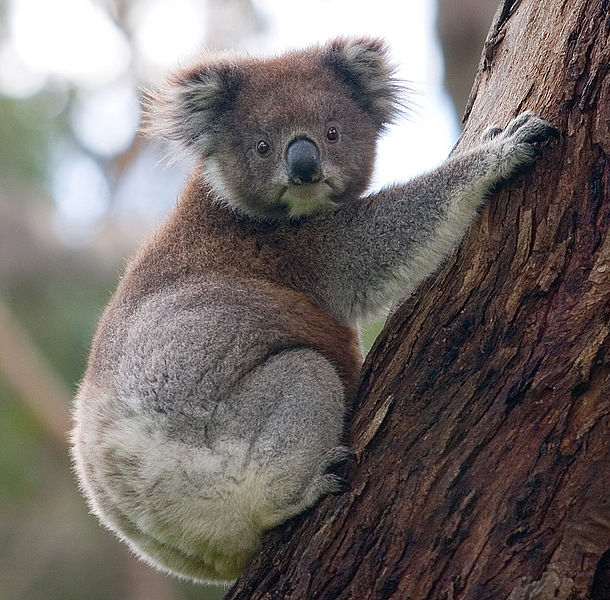
(Wiki cca Author=Diliff "Photo by DAVID ILIFF. License: CC-BY-SA 3.0")


Please write something fresh and new for this challenge and be sure to swing from your rainforest vine to find your near and dear rainforest writing friends!!


Smiles and happy writing to everyone!

Friday, March 29, 2013

Transforming Friday

Salutations to the garden dwellers!! I have your eighth opportunity for expressing poetically the voice of wildlife, (plant or animal), and this one calls for the expression of life in the savanna.


It seems this biome overlaps with some of the other ones that we’ve already explored because it is a transitional zone as mentioned below but that’s okay, I think. :)


Old words that smell of ancient libraries, “Classics Edition of the World Atlas-Hammond 1967,” declares: “The savanna, land of tall grass interspersed with trees, is a place of winter droughts and summer rainfall, the true jungle home of big-game animals.”


Wiki states this of the savanna ecoregion: “It is often believed that savannas feature widely spaced, scattered trees. However, in many savannas, tree densities are higher and trees are more regularly spaced than in forest. Savannas are also characterized by seasonal water availability, with the majority of rainfall confined to one season. Savannas are associated with several types of biomes. Savannas are frequently in a transitional zone between forest and desert or grassland. Savanna covers approximately 20% of the Earth's land area.”


(Via Wiki:Ethel Aardvark Typical tropical savanna in NorthernAustralia

demonstrating the high tree density and regular spacing characteristic of many savannas.)


(Via Wiki:Denis A. C. Conrado Cerrado savanna, Brazil.)


Some threats to the savanna are: Changes in fire management, Grazing and browsing animals, Tree clearing, Exotic plant species and Climate change, (you can read more about these on wiki site if you’d like to).

The savanna animals!!! (be sure to check copyright for the images).

Our long-necked friend, the giraffe...

(Via Wiki: Roland H. The endangered West African giraffe)


Awww...this guy is super cute!!!


Our head-burying and also long-necked, 

long-legged bird pal, the ostrich!! 


(Via Wiki: A. Kniesel head of an ostrich)

Hmm...this creature...
you could give this intriguing animal a voice...♥


(Via Wiki: PD-US author:F. York Quagga (Equus quagga quagga)
is an extinct sub-species of zebra. Mare, London, Regent's Park ZOO)


Okay, Toads, I hope this is fun for you all!

Fresh poems please and when you’re done writing and posting be sure to fill your poetic canteen and visit the words of your savanna-exploring blogging-friends that have linked as well!!

Warm smiles to you all! :)


Friday, February 22, 2013

Transforming Friday

Hello Toads!! It’s me, Hannah with your seventh round of exploring the world’s ecoregions, an opportunity to express poetically the point of view of your choice of creature or wildlife in the Desert Region this time!

Sepia scented words from, ““Classics Edition of the World Atlas-Hammond 1967,” states: “One-fifth of all the land is desert, to dry for farming and populated largely by sheep-herding nomads and those who live in the oases and irrigated valleys.”

So, I had to look this up...I didn’t realize “oases,” was plural for “oasis,” hence: “In geography, an oasis (plural: oases) or is an isolated area of vegetation in a desert, typically surrounding a spring or similar water source.” (from wiki)

Wikipedia says this about the desert region:

“A desert is a landscape or region that receives an extremely low amount of precipitation, less than enough to support growth of most plants.

Deserts take up about one third (33%) of the Earth's land surface.[2] Hot deserts usually have a large diurnal and seasonal temperature range, with high daytime temperatures, and low nighttime temperatures (due to extremely low humidity). In hot deserts the temperature in the daytime can reach 45 °C/113 °F or higher in the summer, and dip to 0 °C/32 °F or lower at nighttime in the winter.

“Many deserts are formed by rain shadows; mountains blocking the path of precipitation to the desert (on the lee side of the mountain). Deserts are often composed of sand and rocky surfaces. Sand dunes called ergs and stony surfaces called hamada surfaces compose a minority of desert surfaces. Exposures of rocky terrain are typical, and reflect minimal soil development and sparseness of vegetation. The soil is rocky because of the low chemical weathering, and the relative absence of a humus fraction.

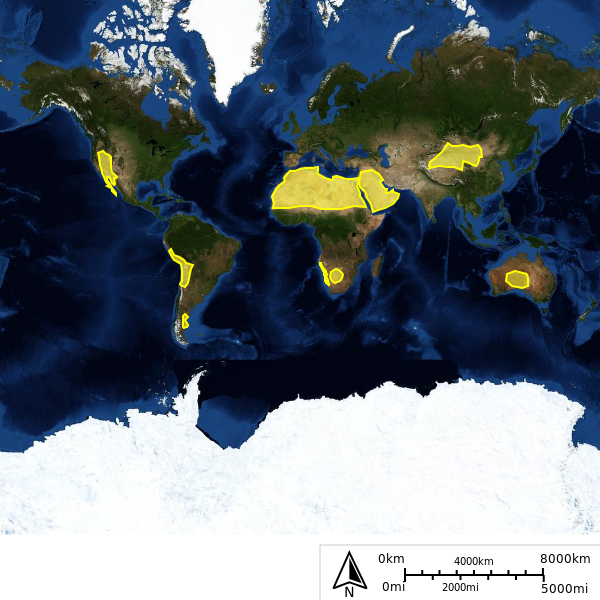
(Photo via Wiki under Creative Commons Attribution The ten largest deserts (Antarctic not included)

World largest deserts deserts included: Sahara, Arabian, Syrian, Kalahari, Namib, Gobi, Australian West, North American, Patagonian, Atacama

And now friendly Toads...our creatures!!

I found some fun lil’ videos!

This guy looks like he could be our cousin..shovel snouted lizard.


Okay, don’t hate me...I hope there’s no arachnophobes here..the Dancing White Lady Spider or the Wheel Spider...


Here, I will make up for the last two with these cute fuzzy Fennec Foxes!! 


Oh, that was fun!! I could browse creatures all day! ;)

Desert wildlife list here, (check source for Copyright).

If there’s a plant/tree type you’d like to embody please do!

Thank you in advance for transforming this Friday...be sure to link something new written specifically for this challenge and try not to get too parched as you visit your blogging desert friends!!

Happy writing!!


Friday, January 18, 2013

Transforming Friday

Hi ALL, it’s Hannah with the sixth session of exploring the point of view of the various wildlife of the world’s ecoregions!!


Good smelly-old words from my ancient, “Classics Edition of the World Atlas-Hammond 1967,” describes our next land-type as the, “Scrub: Olives, grapes, oranges and cork grow in the Mediterranean and California scrub forest regions of cool, rainy winters and hot, dry summers.”

Wikipedia says: “Mediterranean forests, woodlands, and scrub biome, as defined by the World Wildlife Fund, are characterized by dry summers and rainy winters. Summers are typically hot in low-lying inland locations but can be cool near some seas, as near San Francisco, which have a sea of cool waters. Winters are typically mild to cool in low-lying locations but can be cold in inland and higher locations.

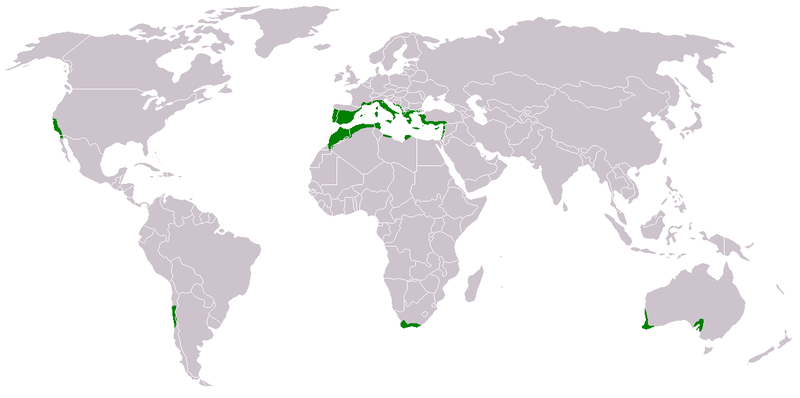
The Mediterranean forests, woodlands, and scrub biome can be found around the world. More specifically, it occurs in the world's five Mediterranean climate zones, on the west coast of continents in the mid-latitudes:
Here’s a map for those who enjoy a visual of the same info.


(Photo via Wiki under CC Author=: Vzb83 from fi)


And now for the critters!! ♥

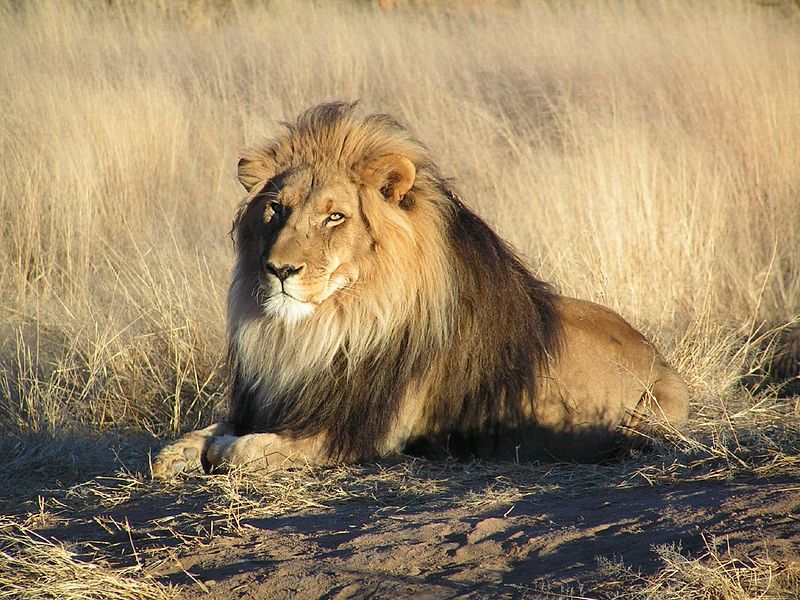
So, you could embody “The King,” of the jungle...not Elvis!! 


(Photo via Wiki under CC  Lion lying down in Namibia |photographer=yaaaay)

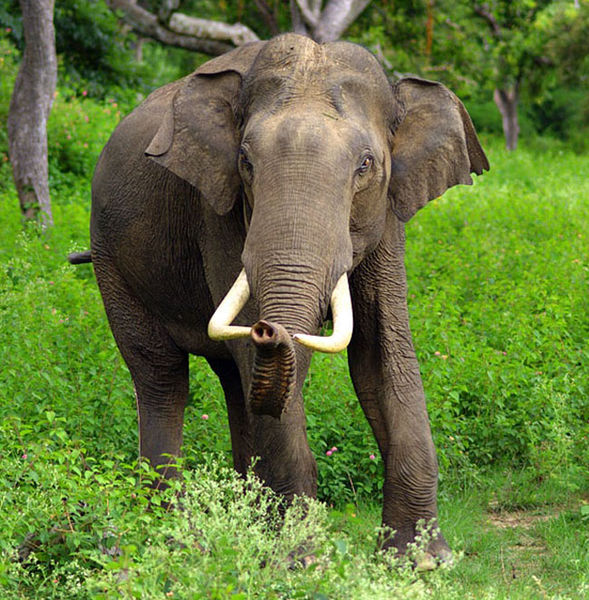
Or....you could write from the pov of this most beloved creature.


(Photo via Wiki under CC Author=Yathin S Krishnappa)

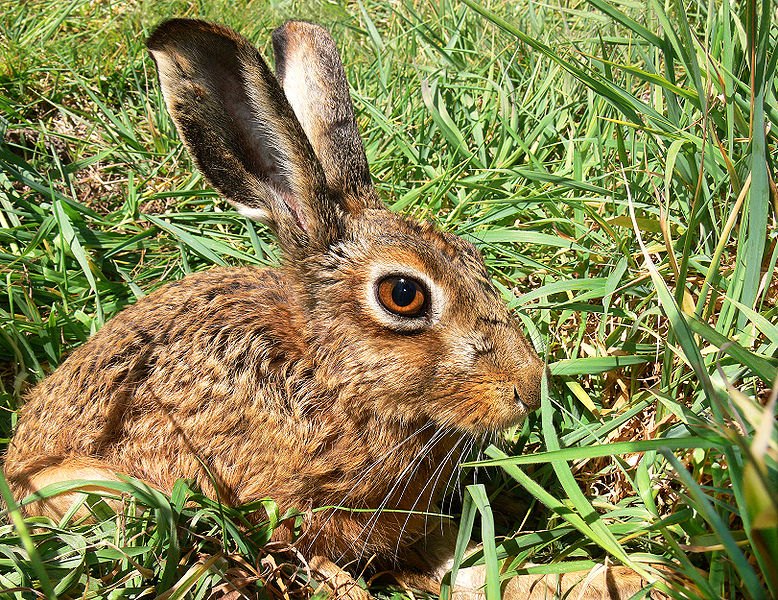
You could bound and leap with this hectic looking Brown Hare!!


(Photo via  Wiki under CC and GNU License Author=benjamint)

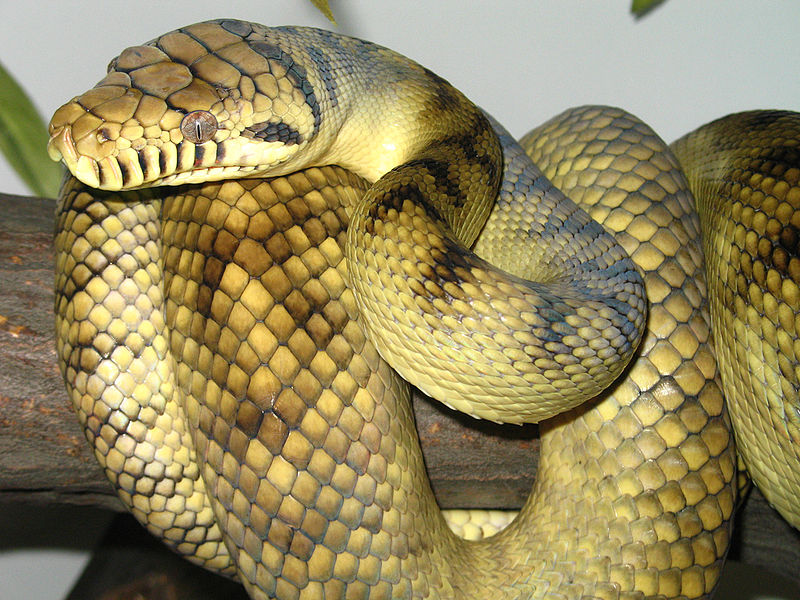
Go ahead...take to the trees and get under the scales of this guy!! 


(Photo via Wiki under CC Author=Mike from Canada High-Yellow Sorong Amethystine Scrub Python)


Alrighty then!!! Here’s an image list of creatures and some plants to scroll for inspiration, (remember copyright issues)!!


Also, if there’s a plant or tree-type you’d like to try-out by all means go for it!!
Link original work written for this prompt specifically please and be sure to visit the, “scrub,” of your blogging forest friends, (that’s the fun part)!!


Smiles to you all and thank you in advance for Transforming this Friday!!


Friday, December 14, 2012

Transforming Friday

Hello everyone!!

It’s Hannah with the fifth session of point of view adventures featuring the various ecoregions of the world.

Our next setting to explore is the Prairie and Steppe...breathe deep and you may be able to catch a whiff of my oldie but goodie, the “Classics Edition of the World Atlas-Hammond 1967,” it says, “On the grassy prairies and steppes are found many of the sheep and cattle ranches of the earth, and where the land has been successfully cultivated, the great grain fields.”

Wikipedia states it this way, “characterized by grassland plains without trees apart from those near rivers and lakes. The prairie (especially the shortgrass and mixed prairie) is an example of a steppe, though it is not usually called such. It may be semi-desert, or covered with grass or shrubs or both, depending on the season and latitude.”

There’s  the Temperate steppe:continental areas of the world and the Subtropical steppe:found in the driest areas with a Mediterranean-like climate. Peculiar types of steppe include shrub-steppe and alpine-steppe.

The locations of the steppe lands are broken down into two categories the cold and subtropical steppe lands...the specific countries where there is prairie is listed, here.

Pretty emerald prairie...


(Wiki Author= user:InvictaHOG Boy participating in horse race at Naadam in Mongolia 7/06.)


Wind-blown grassland...breathes poetry...


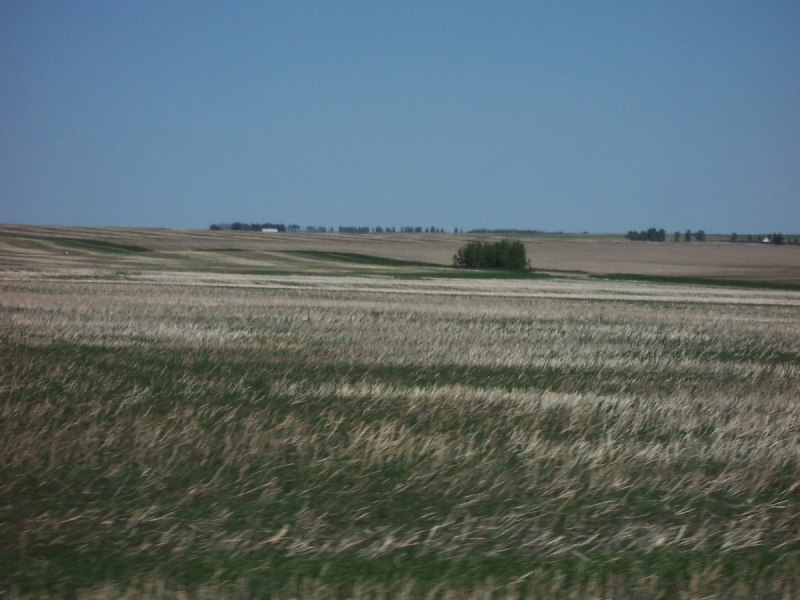
(Wiki Author= Zeitlupe Prairie in Alberta, Canada)


A tiny beauty...prairie smoke A.K.A. Pulsatilla patens.


(Wiki Photograph of Pulsatilla patens growing in Boulder, Colorado.)


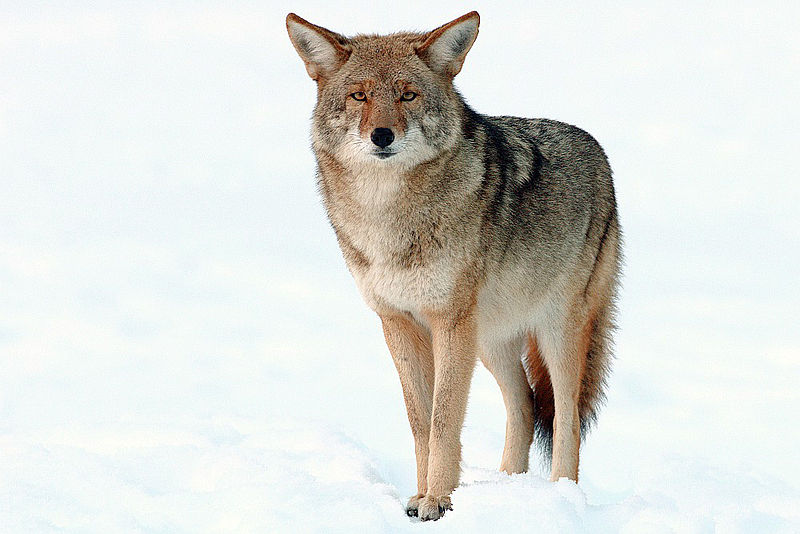
A couple of creatures that you could consider... The coyote also known as the American jackal, brush wolf or the prairie wolf...


(Wiki Author=Yathin S Krishnappa From Yosemite National Park)

Or this singing flit of yellow might attune to your thoughts today...the Prairie Warbler, (Setophaga discolor), is a small songbird.


(Wiki Author= {{Information |Description=Dendroica discolor
|Source=http://en.wikipedia.org/wiki/File:Prairie-Warbler.jpg |Date=11 06 2005 |Author=Wolfgang Wander |Permission= GFDL |other_versions= }})

A general image list for prairie and steppe wildlife, (be sure to check copyrights before sharing).

Here’s a place to read about Prairie Restoration among other issues, if you so desire.

So, assume the point of view of your chosen wildlife fully. Have fun with this!

As always please offer only a new poem written for this challenge specifically and be sure to roam the grasses of your fellow prairie friends!

I look forward to visiting each of you, happy Transforming Friday to everyone!


Friday, November 9, 2012

Transforming Friday

Real toads and poetic pond peeps!!

Hi! It’s Hannah with your fourth round of ecoregion exploration and a call to stretch your poet-voices to express the point of view of wildlife that inhabits the Temperate Forest.

Ideally each of us will claim a new non-human pov and embody the beingness of the plant or animal life of this region.

So, being a creature of habit I’m bringing you an excerpt from my deliciously old-smelling, “ “Classics Edition of the World Atlas-Hammond 1967,” which reads as follows...Temperate Forest: Over half of the world’s population lives and works in the regions of the temperate broadleaf forests which comprise only 7% of the world’s land, including parts of the United States, Europe, China and Japan. The climate here is invigorating, characterized by changeable weather, warm summers and frosty winters.

The main trees found in these forests are oak, ash, maple, birch, beech, poplar, elm and pine. In many areas, forests have been cleared to make way for cultivation. Hardwood evergreen trees which are widely spaced and are found in the Mediterranean region are olive, cork, oak and stone pine, (for more visit Wikipedia -Temperate Forest).


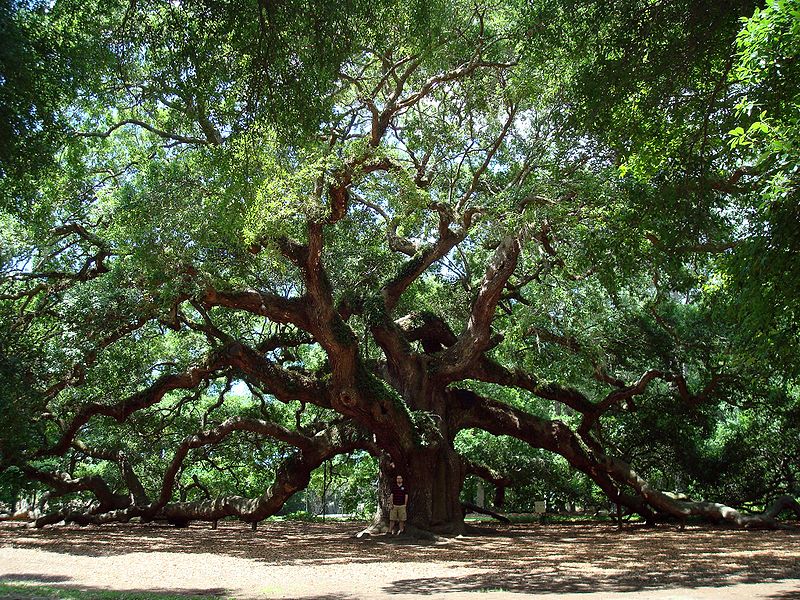
(Wikipedia:The Angel Oak Tree in South Carolina/Author=DannyBoy7783 (talk))

Wow!! Just look at this tree! They’re amazing aren’t they...living-breathing trees.

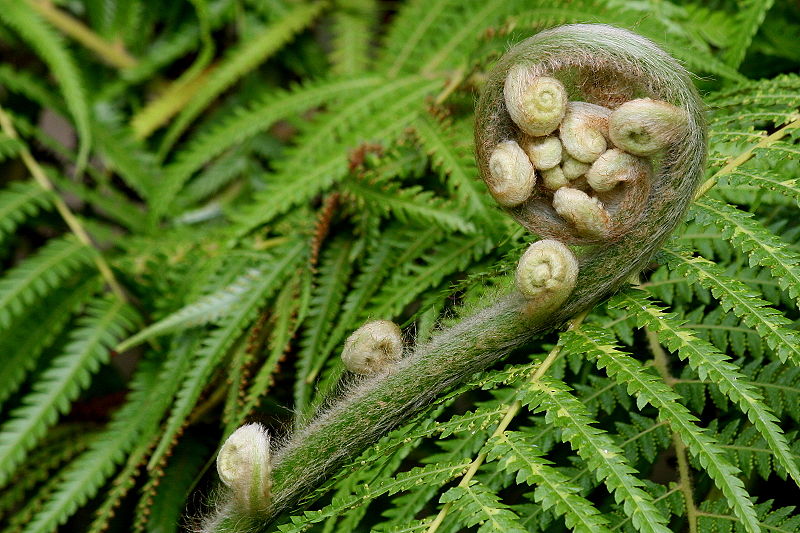
Shrubs and flowers grow there as well. One of my favorites is there...fiddleheads.


(Wikipedia: A fern unrolling a young frond Athyrium filix-femina Author=Rror)

Here’s an image list of the plant and animal wildlife found in the Temperate Forest, (remember to check the copyrights before you post though).  

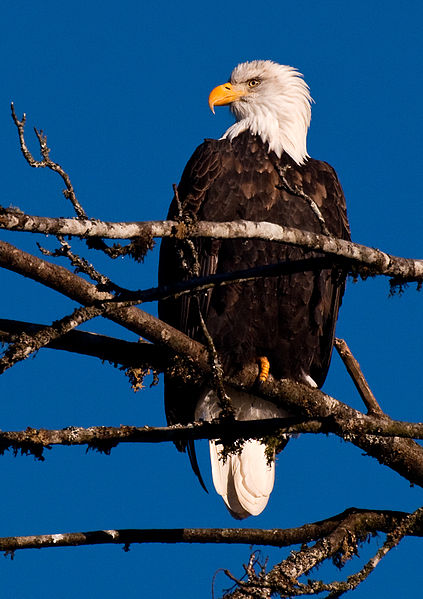
A few beauties that live in the forest...


(Wikipedia: Bald Eagle in the Skagit valley, Washington, USA.

Such a regal creature..

.
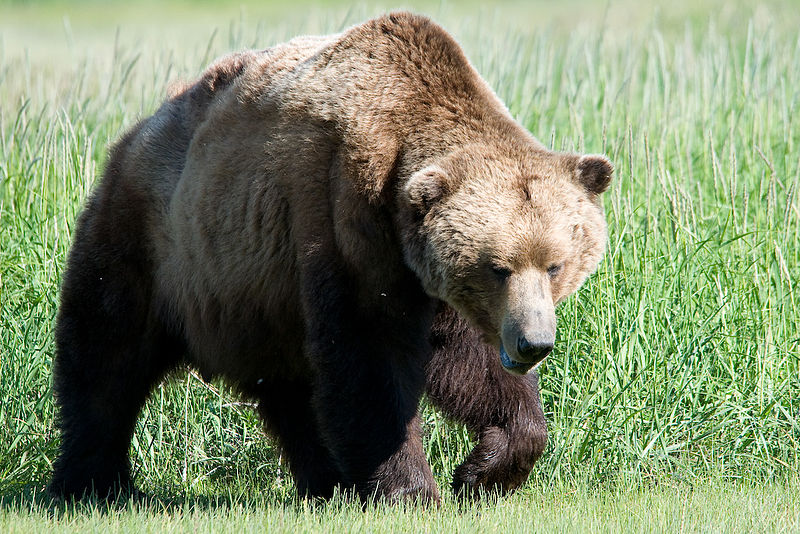
(Wikipedia: Alaska Brown Bear, Hallo Bay, Katmai National Park, Alaska Author= Flickr by Marshmallow)

Imagine walking a mile in his or her paws!

Also feel free to address elements of global importance, if you like, such as extinction, forest fires or as mentioned earlier forest clearing to make way for cultivation.

Link a brand new work today....enjoy yourselves and remember to visit your forest friends!!

Smiles and happy weekend to ALL!