Hello, it's Hannah here bringing you inspiration from the local coffee house!
So today I'd like to invite you to find a spark for your muse from the BrainyQuote site. Explore topics, authors, images...and allow your choice to transform into words.
Here's the "Quote of the Day."
And here's one I'd like to share...
So, normally I write and post from home but I'm not "wired up" yet in our new woodsy home...that being said...I will be back to read each and every one that posts for this challenge but it won't be as quick as usual, apologies and I know that you'll support each other in the in between time so gratitude to you all as well.
Please offer new poetry for this challenge and feel free to link as many as you like!
Hello, it's Hannah here with an opportunity to write poetry through the eyes of Nature...
A totem is a spirit being, sacred object, or symbol of a
tribe, clan, family or individual. Native American tradition provides
that each individual is connected with nine different animals that will
accompany each person through life, acting as guides, (excerpt from Native
American Legends).
“The true shaman, the true naturalist, works to reconnect
conscious human life with Nature and Spirit through totems and ritual.” ― Ted Andrews, Animal Speak: The Spiritual
& Magical Powers of Creatures Great and Small
“If you talk to the animals they will talk with you and you
will know each other. If you do not talk to them, you will not know them, and
what you do not know you will fear. What one fears one destroys. — Chief Dan
George”
This week I have had the dragonfly arrive in my realm in a
way that has felt significant. As I sat at a stoplight on Monday one came and
hovered above my hood and left four times and the last time it appeared to be
looking through the window at me…I said I
see you, what do you want to tell me? It didn't come back after I addressed it...it was like it wanted to be sure I had seen it. I’ve been noticing them on my walks a
lot this week and today while I was at my children’s new school another mother, who I had just
been speaking with, got in her car and her license plate was drgnfly!
Interesting, I think.
(By André Karwath aka Aka - Own work, CC BY-SA 2.5,
“The dragonfly and damselfly reflect and work with the sun
and light. The light changes throughout the day. The dragonfly and damselfly
undergo their own transformations. If they have shown up, look for change to
occur. Are you resisting change when you shouldn’t? Dragonflies remind us that
we are light and can reflect the light in powerful ways if we choose to do so.
“Let there be light” is the divine prompting to use the creative imagination as
a force within your life. This is part of what dragonflies and damselflies
teach us.” ― Ted Andrews, Animal Speak: The Spiritual
& Magical Powers of Creatures Great & Small
I invite you to check out this article from, NATIVE AMERICANLEGENDS – Native American Totem Animals & Their Meanings. It provides a general
background and list of animals. Some might be familiar with this topic…some may
already be acquainted with their animal totem(s). You may browse the list and
choose an animal that speaks to you personally, either a favorite or through past
experiences.
The
list offers some of the Animal Characteristics & Meanings…Please
include these in some way…either directly as a word list or indirectly as a
feeling or metaphor.
Create something new, link up and then enjoy your poetic friends offerings as
well. This challenge will be up for two days so feel free to link as many as you like!
Hello, it's Hannah here with an opportunity to write poetry through the eyes of Nature...
Today I bring you the art and work of environmentalist artist Andy Goldsworthy.
“My art is an attempt to reach beyond the surface
appearance. I want to see growth in wood, time in stone, nature in a city, and
I do not mean its parks but a deeper understanding that a city is nature
too-the ground upon which it is built, the stone with which it is made.”
“As with all my work, whether it's a leaf on a rock or ice on a rock, I'm
trying to get beneath the surface appearance of things. Working the surface of
a stone is an attempt to understand the internal energy of the stone.” AndyGoldsworthy (for more quotes)
Please take a moment to view as little or as much as you'd like or have time for of this amazing film, Rivers and Tides.
Your efforts toward this might lean in the direction of creating your own nature art and then experience the art through words as well. I have a post to share as an example of this, Sea-Salt Soaked Quartz Meditation.
You may write about anything that you've found inspiring here. Please offer something new and visit others as well.
Thank you, for sharing your comments and poems. I look forward to your work!
Hello, it's Hannah here with an opportunity to write poetry through the eyes of Nature: the physical world and everything in it (such as plants, animals, mountains, oceans, stars, etc.), that is not made by people, (Merriam-Webster). Often times I am inspired by the walk and today I invite you to go for a jaunt, too. If it's possible and if it's not...go to the nearest window that looks out on a landscape or cityscape...wherever you are. See what animals, birds or insects that you might find...which plants or trees want to speak through you. If it appeals to you, you could personify this living thing...let them bring the poem today. Some might like to research spiritual meanings and/or facts about their subject to include in their poetry. Today I saw three Osprey...yesterday a flock of Cedar Waxwing...there's so much to see and feel outside...bring us your outside!
(wiki cc sharealike)
Please, link a new poem to Mr. Linky below, the link does not expire,
feel free to post more than one poem, visit others and have fun...
Hello, it's Hannah here with an opportunity to write poetry through the eyes of Nature. : the physical world and everything in it (such as
plants, animals, mountains, oceans, stars, etc.) that is not made by people, (Merriam-Webster).
For the next couple of days, (this post will be featured until Noon on Saturday), explore the world of footprints.
It's your choice of whose feet, (form or free-verse), - the options are wide open: caterpillar, ostrich, gorilla, dog, cat, bear, lion, turtle, human...what stories do their paths tell?
Here're a couple of suggestions for the writing process if you like: Address the Five W's - who, what, where, when and why, use specific sensory details and cause us to vicariously experience the perspective of your chosen being. Also, I found this great wiki site for narrative techniques - perhaps browsing this list could bring a fresh way to introduce your character.
Please, link a new poem to Mr. Linky below, the link does not expire, feel free to post more than one poem, visit others and have fun...I look forward to reading all of your poems!
Thank you, so much for sharing your tracks here, Toads and Pond Dwellers!
Let’s try something…let’s piece the Classical Elements into
our poetry. You can do this in any way that pleases your poetic heart but be
sure to include an array of elements.
The classical elements are: fire, air, water and earth and there’re
a few others according to differing views – the Tao includes wood and metal to
the list, a Babylonia text references sea, earth, sky and wind and, “Aristotle added
a fifth element, aether, as the quintessence, reasoning
that whereas fire, earth, air, and water were earthly and corruptible, since no
changes had been perceived in the heavenly regions, the stars cannot be
made out of any of the four elements but must be made of a different,
unchangeable, heavenly substance.”
Here’s a piece that I found inspiring about Egypt:
“A Greek text called the Kore Kosmou ("Virgin
of the World") ascribed to Hermes Trismegistus (the name given by the
Greeks to the Egyptian god Thoth), names the four elements fire, water, air, and earth. As
described in this book:
And Isis answer made: Of living things, my son, some are
made friends with fire, and some with water, some with air, and
some with earth, and some with two or three of these, and some with all.
And, on the contrary, again some are made enemies of fire, and some of water,
some of earth, and some of air, and some of two of them, and some of three, and
some of all. For instance, son, the locust and all flies flee fire; the eagle
and the hawk and all high-flying birds flee water; fish, air and earth; the
snake avoids the open air. Whereas snakes and all creeping things love earth;
all swimming things love water; winged things, air, of which they are the
citizens; while those that fly still higher love the fire and have the habitat
near it. Not that some of the animals as well do not love fire; for instance
salamanders, for they even have their homes in it. It is because one or another
of the elements doth form their bodies' outer envelope. Each soul, accordingly,
while it is in its body is weighted and constricted by these four.
The Four Classical Elements of Air, Fire, Water and
Earth are a foundational part of the Western worldview and are found in
every aspect of Western esotericism including Kabbalah, Astrology,
Alchemy, Medicine, and the Tarot.
(wiki image share alike)
Have fun writing a new poem for this challenge and reading
the work of others!
This post will be featured till Saturday and Mr.Linky is still active thereafter
– please feel free to join in anytime and I will keep my eye out for your
poetry.
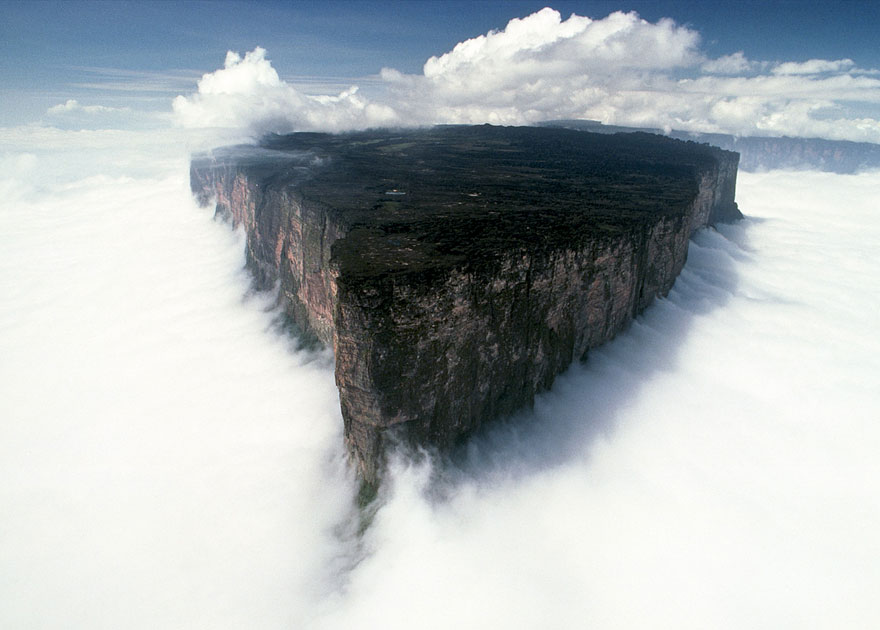
The tabletop mountains of the park are considered some of the oldest geological formations on Earth, dating back to some two billion years ago in the Precambrian.
Vegetation on Mount Roraima wiki
Many of the species found on Roraima are unique to the
plateau. Plants such as pitcher
plants (Heliamphora), Campanula (a bellflower), and the
rare Rapatea heather are commonly found on the escarpment and summit.
It rains almost every day of the year. Almost the entire surface of the summit
is bare sandstone, with only a few bushes (Bonnetia roraimœ)
and algae present.
Maverick Rock, the highest point of Mount Roraima wiki
Since long before the arrival of European explorers, the
mountain has held a special significance for the indigenous people of the
region, and it is central to many of their myths and legends. The Pemon and Kapon natives of the Gran
Sabana see Mount Roraima as the stump of a mighty tree that once held
all the fruits and tuberous vegetables in the world. Felled by Makunaima, their
mythical trickster, the tree crashed to the ground, unleashing a terrible
flood. Roroi in the Pemon language means blue-green and ma means
great.
Explore and be inspired! Please, add your link to your new poem and share in reading others as well. Thank you, for joining the challenge...this will be open until Saturday...I look forward to your words! P.S. I apologize for the strange all caps print...I couldn't get it to switch out of this for some reason...I'm really not shouting!! :)'s
The county of Luoping in eastern Yunnan is
noted for its beautiful scenery in spring, when its fields of canola (also
known as rapeseed)
flowers are in full bloom, surrounding the area's mountains with a sea of
golden flowers to spectacular effect.
Canola field in Luoping cc wiki by Fanghong
Feel free to try your hand exploring any point of view that
pleases you. Flower, butterfly or insect, native of the land, tourist, mountain...
you get the idea...research the area if you like and bring us some facts. It's a springboard for inspiration...
Write something new, have fun and enjoy each other's creative offerings.
Thank you, and happy weekend to ALL in the garden.
Hello! Welcome to day seventeen of poem-a-day for the month of
April – congratulations to everyone participating in this writing – reading –
poetry-loving event!
And because it’s National
Poetry Month I’d like to take the time to feature a form that is particular to
the expression of nature – we’ll celebrate and recognize haiku today because today
is NATIONAL HAIKU POETRY DAY –April 17!!
We’ll speak in the tongue of nature…any facet of the
wild-natural-world that we choose. Express your poetry today in the traditional style of haiku or step into a modern manifestation of haiku in English.
Jack Kerouac (collected in Book of Haikus, Penguin Books, 2003)
Feel free to be expansive in your choice of POV explore a different voice, (is there a plant or animal that would like to be
the breath of your poem today). Sight-see and bring us the place of your
choosing, (include an images if you wish).
If you'd like – write a series of haiku and chain them together
or craft a singular vision. Have fun and sink into the skin of this amazing
ancient and modern form.
I’m attempting to keep this
post brief but please, stopover to the links I’ve provided for further
explanations on the holiday and the haiku form itself.
The poetry you link today must be haiku, and must be new –
written specifically for this post. Thank you!
Please, add your link to Mr. Linky, leave a comment and
visit your syllable-counting nature-loving friends!
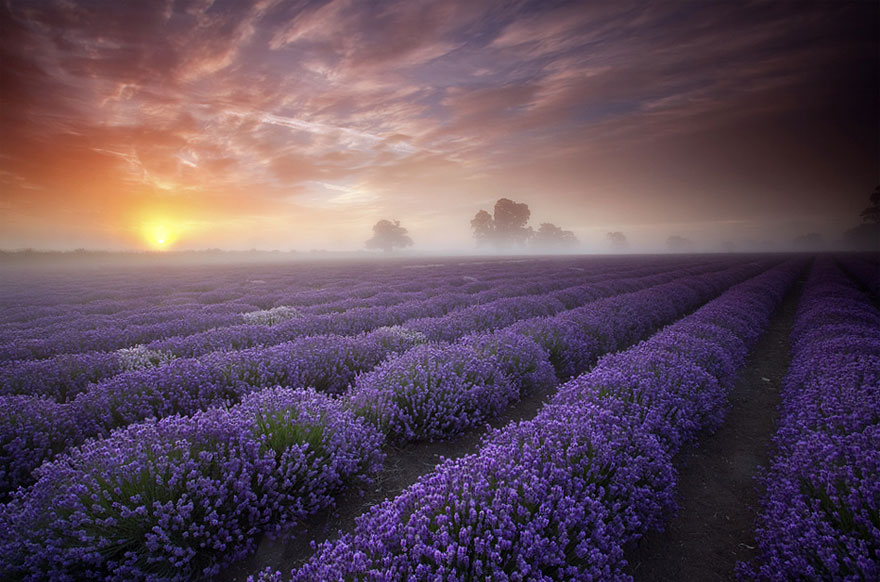
It's Hannah here with beautiful places on this planet for our poetic inspiration - the Lavender Fields of UK and France.
Abbey in France with lavender field-"Sénanque 06" by EmDee - Own work. Licensed under CC
Bored Panda
Sometimes I like to write with music and a visual backdrop behind a minimized word document.
Lavender has many uses - among them, it's medicinal and used for anti-anxiety purposes.
Single lavendar flower cc "Fir0002/Flagstaffotos".
In history...
The ancient Greeks called the lavender herb nardus, after the Syrian city of Naarda (possibly the modern town of Dohuk, Iraq). It was also commonly called nard.
Lavender was one of the holy herbs used in the biblical Temple to prepare the holy essence, and nard ('nerd' in Hebrew) is mentioned in the Song of Solomon.
So...poetic friends...explore the places and/or the plant and bring back that which enthuses your muse!
A Note:
"The challenges and prompts we offer have parameters in regards to form, theme, subject and/or method. We ask that participants respect the time taken by our individual contributors to research, set up their post and visit the links of all who join in by entering into the spirit of the challenge and following the guidelines laid down. Our purpose is to stretch our abilities as writers, and to experiment with new ways of writing. We also request that a participant provide a link back to the post on Real Toads from their own site. The option of The Tuesday Platform does exist for poets to share a poem of their choice, and a link back is not a prerequisite.
The moderators reserve the right to remove any inappropriate or unrelated link that is made on Real Toads, at their own discretion."
As a reminder, this challenge will be on the homepage for Thursday and Friday so you have an extra day for creative process...have fun and I look forward to reading your poems!
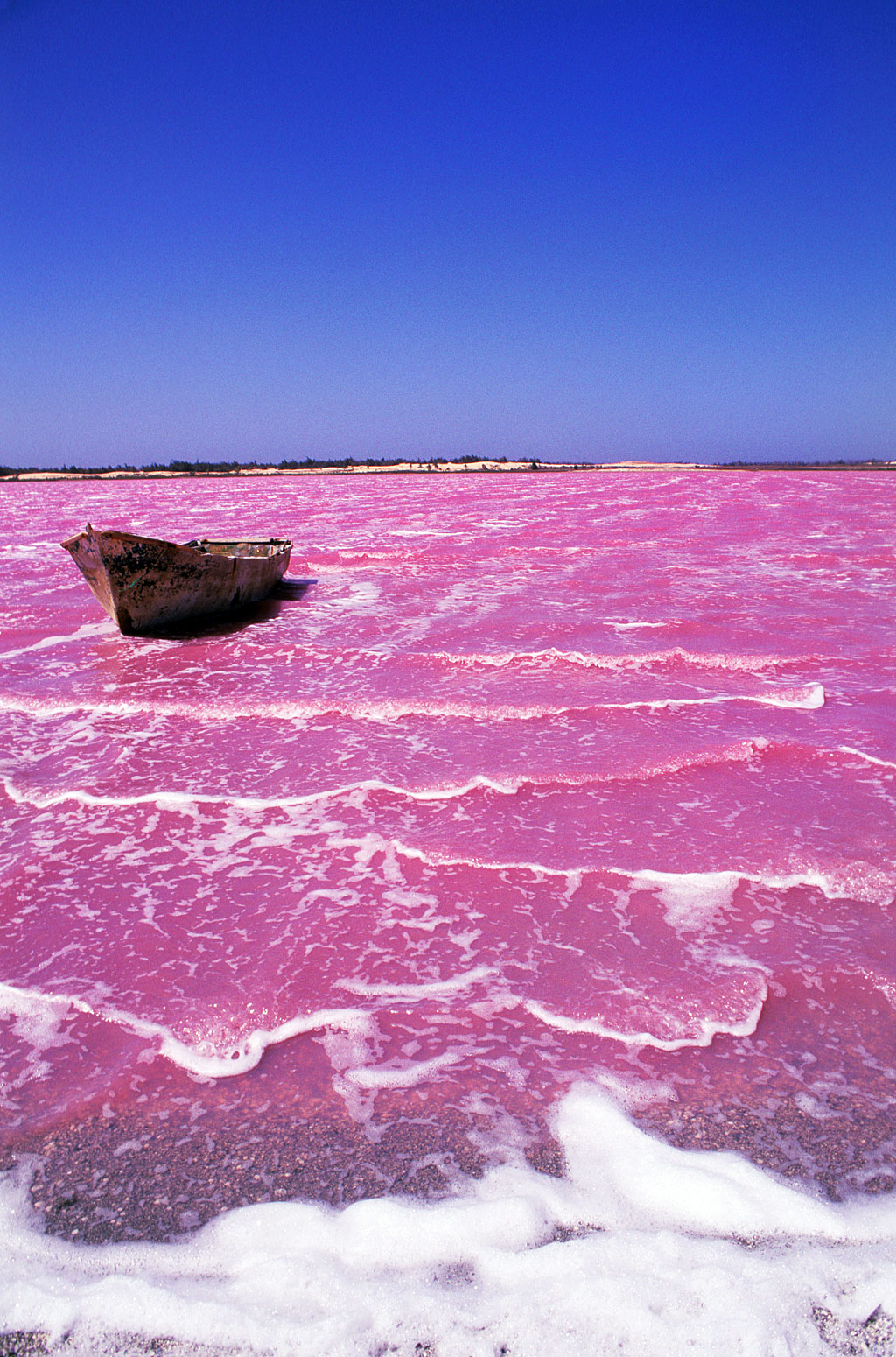
You guessed its intriguing draw...the remarkable pink color is cause for pause!
Lake Hillier is a bubble-gum-pink and it's literally just a few steps away from a “normal” colored Southern Ocean.
Scientists speculate that it’s color is caused by a reaction of sea salt and sodium bicarbonate (which you know as baking soda), and/or caused by red halophilic bacteria in the salt crusts.
This clip, (while slightly on the obnoxious side), is mildly entertaining in its dry-humor and highly informative in its scientific explanation about the phenomenon of this natural wonder. If you can tolerate it - its worth the three minutes...I think. :)
Explore this location and allow your poetic heart to swim in rosy water awhile...submerge and surface with any aspect of this place that inspires you.
It could be as far-fetched as a giant's discarded glob of chewing gum, one could employ metaphor or delve into the microscopic realm of the red halophilic bacteria...point being, the challenge is open for the poet's choosing.
Please, write something new and specifically for this post, link up and visit the others listed and feel free to join late...we'll be sure to check back for new links to read!
Thank you so much for writing and I hope everyone has a wonderful and peaceful weekend.
:)'s Hannah
Images featured are borrowed from web, "free images."
Hello Toads and Pond Dwellers - it's Hannah with a magical natural location to inspire you. Let's explore the wide web searching for aspects of Antelope Canyon, USA, to write poems about.
There's the Upper Antelope Canyon or The Crack; and Lower Antelope Canyon or The Corkscrew.
The Navajo name for Upper Antelope Canyon is Tsé bighánílíní, which means "the place where water runs through rocks" and the Lower Antelope Canyon is Hazdistazí or "spiral rock arches." Both are located within the LeChee Chapter of the Navajo Nation.
Here's a little background on how these canyons were born.
Antelope Canyon was formed by erosion of Navajo Sandstone, primarily due to flash flooding and secondarily due to other sub-aerial processes. Rainwater, especially during monsoon season, runs into the extensive basin above the slot canyon sections, picking up speed and sand as it rushes into the narrow passageways. Over time the passageways eroded away, making the corridors deeper and smoothing hard edges in such a way as to form characteristic 'flowing' shapes in the rock.
Many of the clips were a bit too tourist-y flavored, for my liking but this one made me happy. I hope you enjoy it, too.
There're lots of ways you could include these canyons in your work...it could be the setting, color, sound quality or even explore the canyon in metaphor - the choice is yours. :)
Please offer new poems written for this challenge and be sure to make the rounds. I look forward to reading you. Happy weekend everyone! :)
Sơn Đoòng Cave was found by a local man named Hồ-Khanh in 1991. The whistling sound of wind and roar of fiery stream in the cave heard through the entrance as well as the steep descent prevented the local people to enter the cave. In 2009 it became internationally known when it was explored and surveyed by a group of scientists.
According to the Limberts, (scientist couple that led the survey), takes the title of the world's largest cave. It contains some of the
tallest known stalagmites in the world, which are up to 70 m tall. Behind
the Great Wall of Vietnam were found cave pearls the
size of baseballs, an abnormally large size.
Enjoy some National Geographic if it pleases you.
Step into this for as much or as little as you like, skip around or watch the entirety of this film. Investigate any aspect that captures your poetic attention, there's much to muse upon and feel free to delve into any of the clickable links from the summarized wiki passages above as well.
You may express in any way you like, form or no form and explore your choice of topic included within our given location.
Please, write something new for this challenge and be sure to visit your blogging friends.
(Images via free Hang Son Doong Desktop Wallpapers).
We're making a special trip this time around...I hope you're not tired of mountains or afraid of heights!
This one holds a special place in my heart and it's on my mind - my sister, a few girlfriends and I are planning a hiking trip to occur in two weeks. It will be my third time up...I'm very excited!
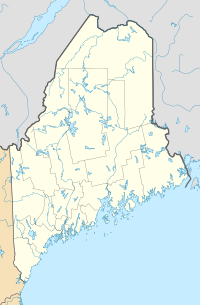
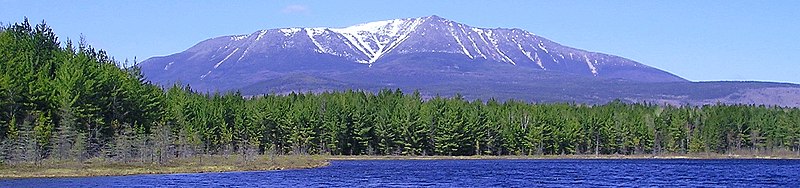
Let's visit Mount Katahdin at Baxter State Park - the highest peak in Maine, U.S.A.!
Forgive me for the copy/paste here for a moment with some background info. but wiki states it well, I think. :)
Mount Katahdin (pronounced /kəˈtɑːdən/, "kə-tah-dən") is the highest mountain in Maine at 5,269 feet (1,606 m). NamedKatahdin by the Penobscot Indians, the term means "The Greatest Mountain".[3] Katahdin is the centerpiece of Baxter State Park: a steep, tall mountain formed from a granite intrusion weathered to the surface.
The flora and fauna on the mountain are typical of those found in northern New England. Katahdin was known to the Native Americans in the region, and was known to Europeans at least since 1689. It has inspired hikes, climbs, journal narratives, paintings, and a piano sonata.[4] The area around the peak was protected by Governor Percival Baxter starting in the 1930s. Katahdin is the northern terminus of theAppalachian Trail, and is located near a stretch known as the Hundred-Mile Wilderness.
In the 1840s Henry David Thoreau climbed Katahdin, which he spelled "Ktaadn"; his ascent is recorded in a well-known chapter of The Maine Woods.[12] A few years later Theodore Winthrop wrote about his visit in Life in the Open Air. Painters Frederic Edwin Church and Marsden Hartley are well-known artists who created landscapes of Katahdin. On Nov. 30 2011, Christie's auctioned Church's 1860 painting Twilight(Katahdin) for $3.1 million.
In the 1930s GovernorPercival Baxter began to acquire land and finally deeded more than 200,000 acres (809 km²) to the State of Maine for a park, named Baxter State Parkafter him. The summit was officially recognized by the US Board on Geographic Names as "Baxter Peak" in 1931.
Then there's the famous, "Knife Edge."
The most famous hike to the summit goes along Knife Edge, which traverses the ridge between Pamola Peak and Baxter Peak. The mountain has claimed 19 lives since 1963,mostly from exposure in bad weather and falls from the Knife Edge. For about 3/10 of a mile the trail is 3 feet wide, with a drop off on either side. The Knife Edge is closed during periods of high wind.
Here's a short clip if you'd like to vicariously experience a little taste of this beautiful mountain and the challenging but fun hike!
I offer a jumping point here...it's meant to inspire just how it inspires and allow authors poetic-wiggle-room. Anything in this post is fair game...a small list of possibilities? How about the Hundred-Mile Wilderness, Henry David Thoreau, the Appalachian Trail, the Penobscot Indians or even the makings of the very mountain itself... the granite intrusion. Or if you have a mountain that's grown a granite stone-shape in your heart, by all means, share!
Enjoy the stroll in the peaks my pond friends, link up a new poem below and visit your neighbors. Thank you!
These pillar like structures are located in 'Zhangjiajie in the Hunan Province of China', close to the Suoxi Valley. 'Tianzi' which means 'Son of Heaven' is named after the farmer Xiang Dakun of the Tujia ethnic group, who led a successful local farmers' revolt and called himself "tianzi," the traditional epithet of the Chinese emperor.
These tall marble towers go up to 1262.5 meters above sea level and pines grow all over the mountains.Often mist and clouds drape these mountains creating a mystic atmosphere.


.jpg/1024px-Sympetrum_flaveolum_-_side_(aka).jpg)